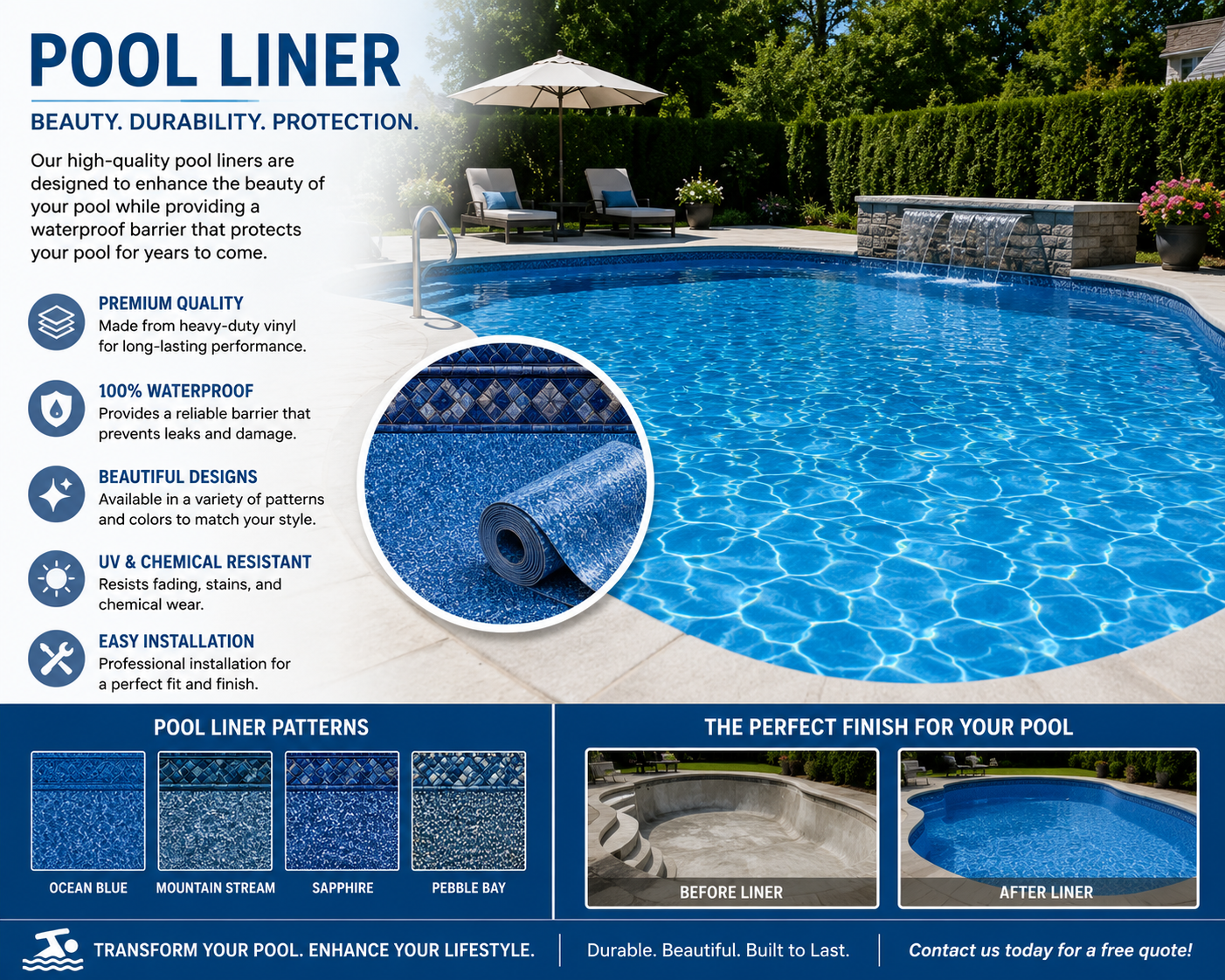
A swimming pool liner works quietly in the background, but its role is essential. It creates a watertight barrier, protects the pool structure, and contributes significantly to the overall appearance of the swimming area. Like any material exposed to water, chemicals, sunlight, and changing temperatures, however, a liner will eventually show signs of age.
Knowing when to consider pool liner replacement can help homeowners address deterioration before it leads to larger concerns. While a faded liner may simply affect appearance, cracks, stretching, leaks, and damaged areas can interfere with the pool’s performance.
Understanding the warning signs and replacement process makes it easier to plan the project with confidence.
How Do You Know When a Pool Liner Needs Replacing?
Not every faded or wrinkled liner needs immediate replacement. The key is determining whether the problem is cosmetic, localized, or a sign of widespread deterioration.
Homeowners should periodically inspect the pool and pay attention to changes that develop between swimming seasons.
Cracks and Tears
Small tears may appear around fittings, corners, steps, or other areas where the liner experiences additional stress. As liner material ages, it can lose flexibility and become more vulnerable to cracking.
A minor damaged area may sometimes be manageable, but multiple cracks or increasingly brittle material can indicate that the liner is nearing the end of its useful life.
Persistent Water Loss
Swimming pools naturally lose some water through evaporation and normal use. However, a water level that repeatedly drops more than expected deserves investigation.
A damaged liner is one possible source of water loss. Identifying the cause early is important because water escaping behind the liner can potentially affect surrounding areas.
Fading Can Reveal More Than an Appearance Problem
Sunlight and pool chemicals can gradually alter a liner’s appearance.
Some fading is expected as a liner ages. Significant discoloration, however, may accompany changes in the material’s condition. A liner that feels increasingly stiff or brittle deserves closer attention, particularly if fading appears alongside cracking or other damage.
This is why evaluating several symptoms together is often more useful than focusing on appearance alone.
What Happens During Pool Liner Replacement?
Replacing a liner involves several carefully coordinated stages.
The Existing Liner Is Removed
The old liner must first be taken out so the underlying pool surfaces can be inspected. This stage provides valuable access to areas that are normally hidden.
Once exposed, the pool floor and walls can be checked for irregularities, deterioration, or other conditions that could affect the new liner.
The Pool Surface Is Prepared
Surface preparation can have a major influence on the finished result.
Debris, rough areas, and imperfections need attention before a new liner is positioned. Installing fresh material over an unsuitable surface could create visible irregularities or contribute to premature wear.
Proper preparation provides the smooth foundation needed for a secure fit.
Why Accurate Measurements Are Essential
Every liner needs to match the dimensions and contours of the pool.
Measurements may include length, width, depth, wall height, floor slopes, corners, steps, and other structural features. Pools with unusual configurations can require particularly careful measurement.
An experienced local pool specialist can assess these details and determine what preparation may be required before installation begins.
Accuracy at this stage helps reduce the risk of loose sections, excessive stretching, or alignment problems.
What Happens After the New Liner Is Positioned?
Once the liner is correctly positioned, trapped air is removed so the material can settle closely against the pool walls and floor.
Water is then introduced in a controlled manner.
As the pool fills, the increasing water pressure helps secure the liner against the prepared surfaces. Alignment and fit should be monitored throughout this process, especially around corners, steps, fittings, and transitions.
Openings for relevant pool components must also be handled carefully to preserve a secure, watertight finish.
How Can You Protect a Replacement Liner?
Pool liner replacement is only part of the equation. Routine care can help protect the new material from unnecessary wear.
Keep Water Chemistry Balanced
Maintaining appropriate water conditions is important for liner care. Chemical imbalances can contribute to fading, staining, or deterioration over time.
Regular testing allows homeowners to identify and correct changes before they become persistent.
Avoid Sharp Objects
Sharp or rough objects can puncture or scratch liner material. Pool accessories should be checked for damaged edges, and care should be taken when using maintenance equipment near the liner.
Monitor Unusual Changes
Wrinkles, unexpected water loss, discoloration, or visible damage should not be ignored. Investigating changes promptly can make it easier to identify their cause.
Should You Repair or Replace an Aging Liner?
The answer depends on the extent and location of the damage.
An isolated issue on otherwise flexible, healthy material may be different from widespread cracking or deterioration. The age and general condition of the liner should therefore be considered alongside the immediate problem.
Repeatedly addressing individual damaged areas may become less practical when deterioration is occurring throughout the liner.
Planning Ahead Can Reduce Disruption
Waiting for a severely deteriorated liner to fail can create unnecessary inconvenience.
Regular inspections give homeowners an opportunity to notice changes early and plan replacement at a suitable time. This can be especially useful when preparing the pool for an upcoming swimming season.
Planning ahead also provides time to assess the underlying pool condition and coordinate any additional work that may be needed.
Conclusion
Pool liner replacement is an important part of maintaining a functional, attractive swimming pool as it ages. Persistent water loss, cracks, brittleness, extensive fading, and recurring damage can all indicate that the existing liner deserves closer attention.
A successful replacement involves more than removing old material. Accurate measurements, careful surface preparation, proper positioning, and controlled filling all contribute to a smooth and dependable result.
By inspecting the liner regularly and responding to deterioration early, homeowners can make better maintenance decisions and protect the pool’s underlying structure. With proper installation and ongoing care, a new liner can refresh the entire swimming area and support many more enjoyable seasons in the backyard.