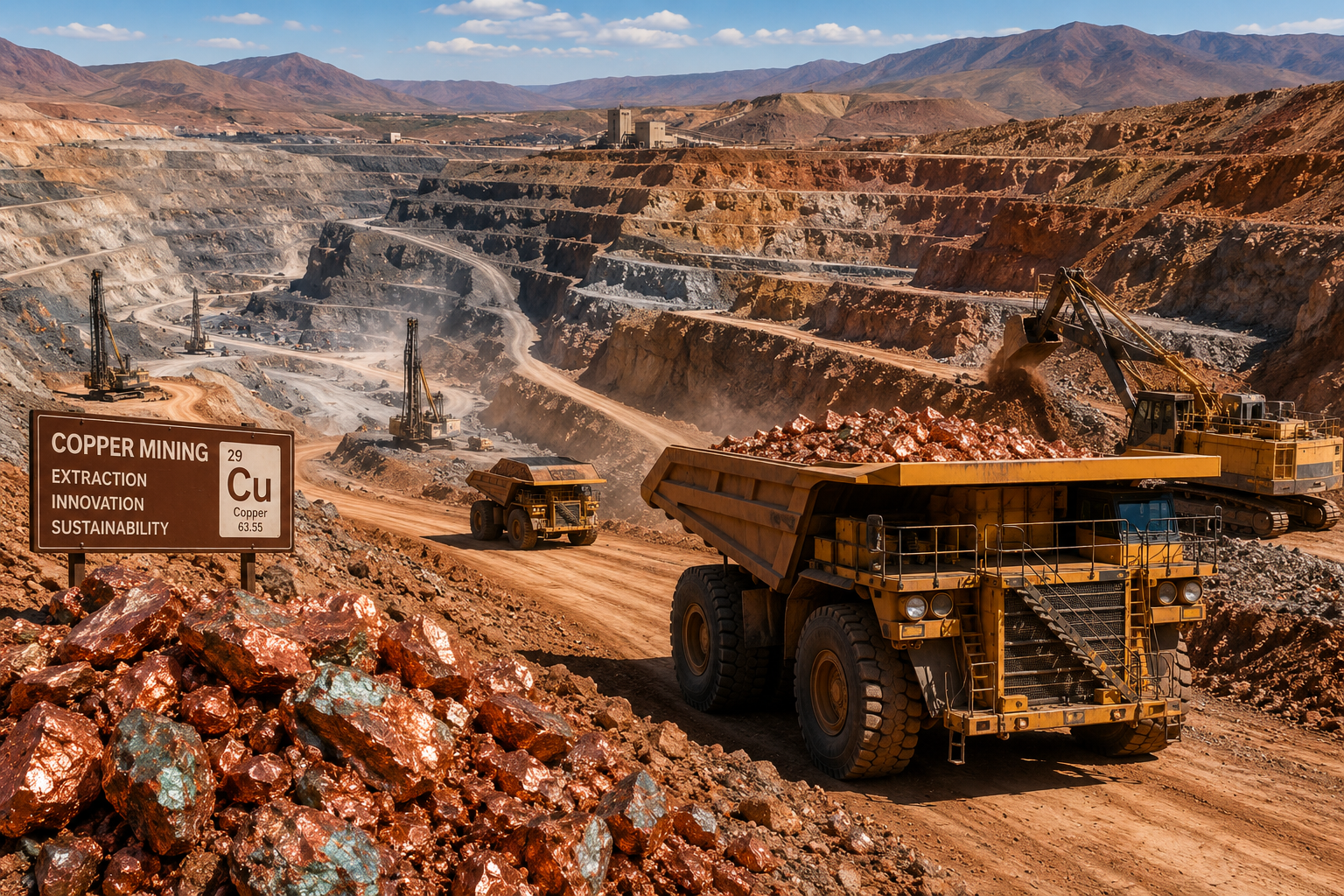
Mining in Michigan represents more than the extraction of valuable minerals from underground rock formations. It brings together geology, skilled labor, engineering, environmental planning, infrastructure, and community interests. Michigan’s mineral-rich geology has shaped parts of the state for generations, particularly in northern areas where ancient rock formations contain important resources. Today, understanding mining means looking at the complete journey from early exploration through operation, reclamation, and long-term land management.
A Landscape Shaped by Ancient Geology
Michigan’s geological story stretches back an extraordinary amount of time. Natural processes involving heat, pressure, volcanic activity, erosion, and mineral-rich fluids helped create the rock formations found across the state today.
Some of these formations contain concentrations of metallic minerals. Consequently, Mining in Michigan begins with understanding where these resources occur and how they developed.
Geologists examine rock types, structural features, mineral composition, and historical geological information. Their findings provide the foundation for more detailed exploration.
Exploration Turns Geology Into Information
Exploration programs can include field mapping, drilling, sampling, and laboratory analysis. Core samples collected through drilling give specialists a direct look at rock located far beneath the surface.
These samples can reveal mineral concentration, rock strength, geological boundaries, and other characteristics. By combining information from multiple locations, specialists can build detailed models of underground formations.
For Mining in Michigan, reliable geological information is essential because every deposit has different characteristics. A development approach suitable for one location may not be appropriate elsewhere.
The People Behind Modern Mining
Heavy machinery may be highly visible at a mine, but skilled workers make operations possible. Modern mineral development requires people from many professional and technical backgrounds.
Engineers plan infrastructure and extraction activities. Geologists study mineral deposits. Mechanics keep specialized equipment operating, while electricians maintain electrical systems. Environmental professionals collect data and oversee monitoring activities.
Mining in Michigan can also require equipment operators, safety specialists, laboratory workers, construction crews, surveyors, and administrative professionals.
Developing Transferable Skills
Many mining occupations involve skills that can remain useful across other industries. Mechanical maintenance, electrical work, heavy-equipment operation, environmental monitoring, construction, and engineering have applications well beyond a single site.
This workforce dimension gives Mining in Michigan significance beyond mineral production. Training and practical experience can contribute to a broader pool of technical knowledge within a region.
Infrastructure Makes Mining Possible
A mineral deposit cannot be developed effectively without supporting infrastructure. Depending on the location and mining method, a project may require access roads, electrical systems, water-management infrastructure, maintenance facilities, and material-handling areas.
Underground operations add another level of complexity. Workers need safe access routes, ventilation, communication systems, ground support, and reliable transportation for people and materials.
Planning infrastructure for Mining in Michigan requires engineers to consider both immediate operating requirements and long-term site responsibilities.
Environmental Information Guides Decisions
Before significant development takes place, specialists can gather information about existing environmental conditions. This process creates a baseline against which future conditions can be evaluated.
Studies may examine groundwater, surface water, wetlands, vegetation, wildlife, soil, and other natural features. The exact scope depends on the characteristics of the location.
For modern Mining in Michigan, environmental information supports engineering decisions and management strategies throughout the life of an operation.
Water Requires Careful Management
Water is one of the most important considerations around many mine sites. Groundwater may enter underground workings, while precipitation can create surface runoff that must be managed appropriately.
Collection, storage, treatment, monitoring, and discharge strategies can all form parts of a water-management system.
Effective water planning for Mining in Michigan depends on understanding local conditions rather than relying on a single approach. Regular monitoring provides information that can help specialists evaluate whether management systems are performing as intended.
Connecting Mineral Development With Communities
Mining projects operate within broader communities and regions. Their effects can extend to employment, transportation, infrastructure, local services, and workforce development.
Mining in Michigan can create direct roles for skilled employees while also generating demand for supporting activities such as construction, maintenance, transportation, and technical services.
At the same time, communities often want clear information about land use, environmental protection, traffic, water, employment, and reclamation. These questions are an important part of understanding potential mineral development.
Communication Builds Better Understanding
Technical mining information can be complex. Geological models, engineering studies, environmental data, and monitoring results may be difficult to interpret without context.
Clear communication can make these subjects more accessible. When information about Mining in Michigan is presented in understandable language, residents can better evaluate proposals, ask informed questions, and follow developments over time.
Reclamation Is Part of the Mining Cycle
Mining is temporary, even when an operation lasts many years. That makes closure planning a necessary part of responsible development.
Reclamation can include removing selected infrastructure, stabilizing disturbed ground, managing water, reshaping areas where appropriate, and restoring vegetation. Some locations may also require environmental monitoring after active operations end.
Modern Mining in Michigan therefore involves thinking about future conditions before extraction is complete. Decisions made during operation can influence how efficiently a site can eventually transition toward closure.
Why Responsible Planning Matters
Mineral resources can support infrastructure and manufacturing, but extracting them requires careful decisions. Safety, environmental management, technical feasibility, economic considerations, and community interests all influence how mining projects are evaluated.
Responsible Mining in Michigan depends on understanding these factors together. Geological potential alone is only one part of the picture. Effective development also requires skilled people, appropriate technology, detailed engineering, environmental safeguards, and long-term planning.
Conclusion
Mining in Michigan brings together the state’s ancient geology and the skills, technologies, and responsibilities associated with modern resource development. From exploration and workforce development to infrastructure, water management, community communication, and reclamation, mining involves many interconnected activities. Understanding this broader picture helps explain why careful planning matters throughout the mine life cycle and why informed participation remains important when communities consider the future of Michigan’s mineral resources.