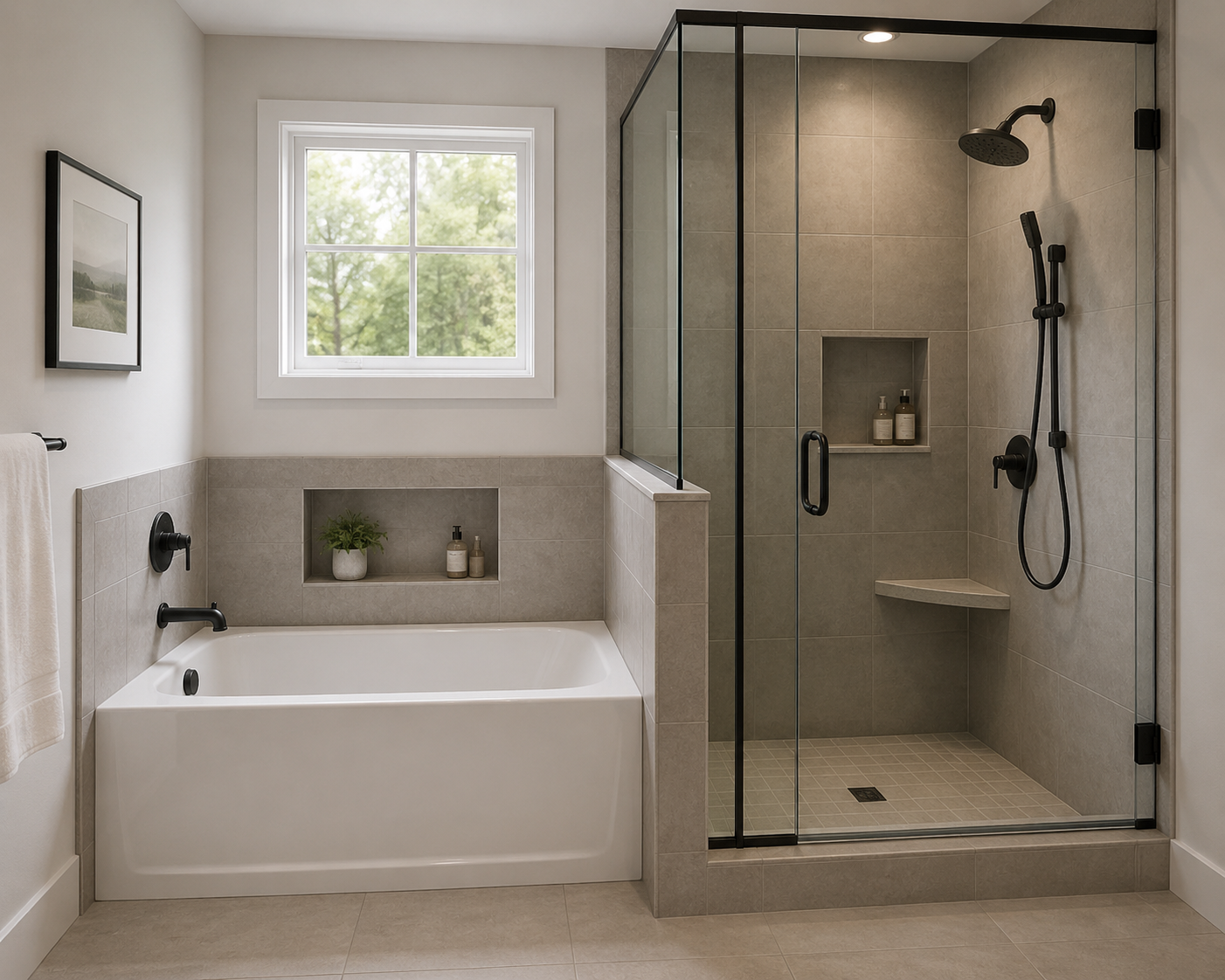
A bathroom should be comfortable to use without becoming difficult to maintain. Older tubs, crowded storage, worn surfaces, and awkward corners can make routine cleaning more time-consuming than necessary. A bathtub to shower conversion gives homeowners an opportunity to rethink the bathing area with cleanliness, organization, and everyday convenience in mind.
Rather than focusing only on appearance, planning for maintenance can make the renovated space more enjoyable over the long term. Surface selection, drainage, ventilation, storage, and shower layout all influence how easily the bathroom can be kept fresh and organized.
Why Maintenance Matters When Planning a Conversion
A beautiful bathroom can quickly become frustrating when its design includes hard-to-reach areas or surfaces that require constant attention. Before beginning a bathtub to shower conversion, it helps to consider how each design decision will affect regular cleaning.
Traditional tubs can have narrow gaps, raised edges, and surrounding areas that are inconvenient to reach. Replacing the tub with a thoughtfully designed shower may simplify the bathing zone and create more accessible surfaces.
Planning around everyday maintenance can also prevent clutter from becoming part of the permanent bathroom layout.
Choose Shower Surfaces Carefully
Wall and floor materials influence both appearance and upkeep. While detailed patterns can add character, excessive joints and complicated textures may create additional areas where moisture and residue can collect.
A bathtub to shower conversion provides an opportunity to select surfaces that balance visual interest with practical maintenance.
Consider Fewer Interruptions
Larger wall surfaces can produce a streamlined look while reducing the number of visible joints. A simpler design may also make wiping down the shower more straightforward.
However, flooring requires a different approach. The shower floor should provide appropriate traction while allowing water to move efficiently toward the drain.
Homeowners exploring bathroom renovation options nearby can consider maintenance requirements alongside appearance when evaluating materials and layouts.
Plan for Effective Drainage
Standing water can make a shower harder to maintain. Proper drainage is therefore an essential part of any bathtub to shower conversion.
The shower base should direct water toward the drain efficiently. Correct slope and drain positioning help reduce areas where water can remain after showering.
Keep Drain Access Practical
Drain placement should also allow reasonable access for routine cleaning. A visually attractive drain design is useful, but functionality should remain the priority.
The entire drainage arrangement needs to work with the shower dimensions and water flow. Addressing these details during planning can contribute to easier long-term maintenance.
Build Storage Into the Shower
One of the simplest ways to keep a bathroom looking clean is to reduce clutter. Shampoo bottles, soaps, and other toiletries can quickly accumulate around a shower when there is no dedicated storage.
During a bathtub to shower conversion, homeowners can incorporate storage directly into the bathing area.
Recessed niches are particularly useful because they provide storage without occupying standing space. Shelves can also work well when placed where water does not continuously collect around stored items.
Store Essentials Where They Are Used
Good storage is not simply about creating more space. It should make everyday items easy to reach and easy to put away.
When toiletries have dedicated locations, the shower can remain visually organized while floor and ledge areas stay clearer for cleaning.
Think About the Shower Enclosure
The enclosure can significantly influence the appearance and maintenance needs of the renovated bathroom.
Transparent panels can make the room feel open and bright. They also allow the shower’s interior finishes to remain visible from the rest of the bathroom.
For an easy-to-maintain bathtub to shower conversion, homeowners should consider how many tracks, frames, corners, and overlapping components the enclosure introduces.
Simpler configurations generally provide fewer complicated areas requiring attention during routine cleaning.
Improve Bathroom Ventilation
Water is only one source of moisture in a bathroom. Steam and humidity can remain in the room long after the shower is finished.
Effective ventilation helps move humid air out of the bathroom and supports faster drying of wet surfaces.
Ventilation Supports the Entire Room
A bathtub to shower conversion should be planned as part of the broader bathroom environment. Even excellent shower materials benefit from proper airflow.
Ventilation can help manage condensation on mirrors, walls, ceilings, and other surfaces. It also contributes to a more comfortable bathroom after showering.
Use an Organized, Uncluttered Design
Bathrooms often feel easier to clean when the design itself is visually simple. Too many decorative ledges, unnecessary fixtures, or competing materials can create additional maintenance points.
A bathtub to shower conversion can help streamline the room by replacing a bulky bathing fixture with a cleaner layout.
Coordinating shower finishes with the rest of the bathroom can create continuity, while keeping frequently used accessories organized prevents visual clutter from returning.
Remember What Happens Behind the Walls
Visible surfaces receive most of the design attention, but proper preparation behind them is essential.
Waterproofing should protect vulnerable areas around the shower base, walls, corners, joints, and plumbing penetrations. Proper installation helps manage moisture before it can affect surrounding materials.
A bathtub to shower conversion should therefore combine easy-to-clean finishes with reliable construction underneath them.
Conclusion
An attractive bathroom becomes even more valuable when it is straightforward to maintain. Thoughtful drainage, practical storage, suitable surfaces, effective ventilation, and a streamlined enclosure can reduce unnecessary cleaning challenges while creating a comfortable bathing area.
A bathtub to shower conversion offers an opportunity to design around real daily routines instead of appearance alone. By considering maintenance from the beginning, homeowners can create a shower that stays organized, functional, and inviting with less effort for years to come.