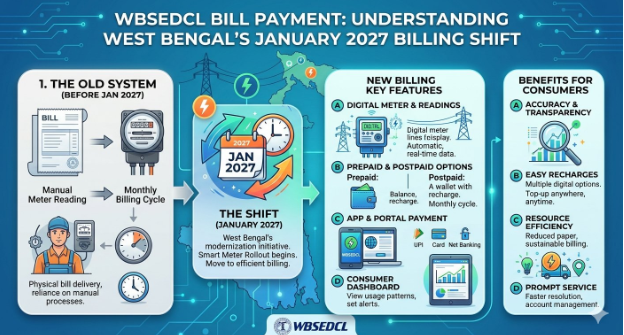
Starting January 2027, West Bengal plans to shift from quarterly to monthly billing cycles for electricity, a change that will significantly impact household budget management. For consumers, this shift means a more manageable cash flow, as monthly billing can help reduce the burden of larger, lump-sum payments. Understanding the implications of the monthly billing structure, particularly concerning bill payment, is essential for residents in this region.
Transitioning to monthly billing presents both advantages and challenges. On one hand, monthly bills can help consumers better align their electricity expenditures with their income cycles. This allows for more precise budgeting and fewer instances of financial strain resulting from unexpected large bills. However, it also requires households to be more diligent about monitoring their electricity usage and payments over time.
The Mechanics of Monthly Billing
Monthly billing will change how consumers interact with their electricity bills. The West Bengal State Electricity Distribution Company Limited (WBSEDCL) will provide consumption details more frequently. This is important because it offers consumers insights into their electricity usage and associated costs.
With the transition to monthly billing, understanding how your WBSEDCL bill is calculated will be crucial. Households will pay for their actual electricity usage each month instead of a projected amount based on past consumption. This shift means that your WBSEDCL bill will directly reflect your energy habits and any seasonal consumption variations.
The previous system relied on average consumption estimates over a three-month period, which sometimes resulted in overpayments or underpayments. With the new monthly structure, consumers will be charged only for what they use, making payments more accurate. However, it also places the onus on individuals to track their consumption and adjust their habits for greater efficiency.
Implications for Household Cash Flow
Transitioning to monthly billing will impact household cash flow positively in several ways. First, the new system is expected to prevent ‘bill shock’, where consumers face unexpectedly high bills after a three-month period. This can lead to financial distress for families that may not have set aside adequate funds for larger bills.
Secondly, better cash flow management is crucial for households operating on fixed incomes or tight budgets. By making smaller, more frequent payments, families can balance their other expenses, such as groceries and transportation, more effectively. This smoother cash flow can contribute to financial stability, making it easier to manage other financial obligations or even save for future needs.
However, consumers must also be aware of potential pitfalls. With more frequent billing, there may be an increased temptation to overlook or delay payments. Managing smaller payments can lead to complacency, resulting in overdue bills. Therefore, it will be essential to establish reminders or use digital platforms for wbsedcl bill download to stay current with billing cycles. Regular wbsedcl bill payment can help households avoid overdue bills and maintain accurate payment records.
Leveraging Digital Platforms for Payment Management
Utilizing digital platforms for managing electricity payments will become increasingly important with the new billing cycle. Many consumers may find it beneficial to access their WBSEDCL bill through online channels. The ability to complete a wbsedcl bill download can help in tracking expenses and maintaining financial records.
By leveraging platforms like Bajaj Pay, consumers can easily manage their payments without incurring any additional fees. Bajaj Pay allows for smooth transactions directly from their app or website, providing confirmation for each payment processed. This transparency is critical for residents adapting to the new billing format to ensure they keep track of their monthly expenses.
Moreover, they’ll also benefit from tracking their previous bills and usage patterns, which can lead to more informed decisions about future energy consumption. Understanding past consumption can help households identify trends and plan for potential savings. Consumers can use their wbsedcl bill download records to compare monthly electricity expenses and plan their budgets accordingly.
Paying through Bajaj Pay
Bajaj Pay, the Bharat Connect payments platform on Bajaj Finance, enables consumers in West Bengal to complete wbsedcl bill payment effortlessly. There are no fees associated with this payment method, making it an economical choice for households. Here’s how the process typically unfolds:
- Download the Bajaj Finance App or visit the website.
- Enter your consumer ID or WBSEDCL account number.
- Select the amount you wish to pay.
- Complete the payment using any supported method (credit/debit card, UPI, etc.).
- Receive instant confirmation and download your receipt.
These features make it easier for households to adjust to the new monthly billing structure while ensuring their payments are timely and accurate. Consumers can also keep their payment receipts alongside their wbsedcl bill download records for convenient reference.
Conclusion
The shift from quarterly to monthly billing by WBSEDCL in January 2027 is set to present an opportunity for improved cash flow management for consumers. By understanding changes in billing mechanics and utilizing digital platforms for payment management, households can navigate this transition successfully. Bajaj Pay offers an efficient, fee-free option for wbsedcl bill payment, making it easier than ever to manage electricity costs. Embracing this change can lead to more satisfactory budget management and less financial stress.