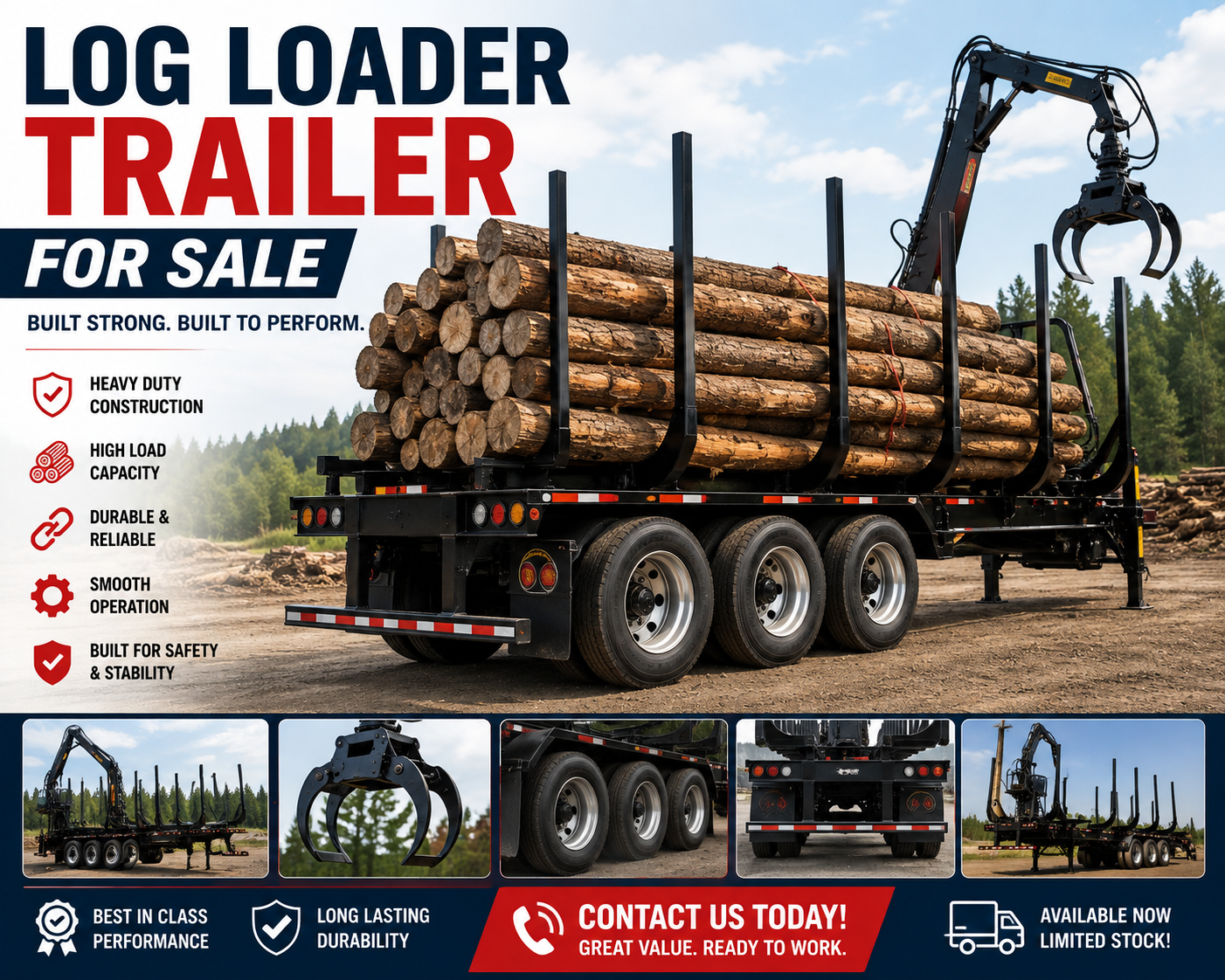
Transporting timber through woodland can be challenging because logs are heavy, irregular, and often located far from convenient access points. A logging trailer gives operators a practical way to collect and move timber while reducing repeated manual handling. Whether the work involves maintaining private woodland, clearing trees, preparing firewood, or managing regular forestry tasks, suitable hauling equipment can make the process more organized. Choosing the right setup requires careful attention to timber size, terrain, capacity, loading methods, durability, and safety.
How a Logging Trailer Improves Timber Handling
Forestry work involves several connected stages. Trees are cut, logs are prepared, timber is collected, and material must eventually reach a processing or storage location. Poor transportation planning can create delays between these stages.
A logging trailer helps connect cutting and processing areas by allowing multiple logs to be moved together. This reduces the need to transport timber individually and can lower the number of journeys across the worksite.
Efficient transport also helps keep cutting areas clearer, giving workers more room to continue forestry operations.
Match Equipment to Typical Timber
Logs differ considerably depending on tree species, moisture content, diameter, and length. Equipment should therefore be selected according to the material handled most frequently.
Before choosing a logging trailer, estimate the typical dimensions and weight of your timber. Consider whether logs are generally straight and consistent or irregular and difficult to position.
Selecting equipment for everyday requirements usually provides better efficiency than choosing excessive capacity for rare situations.
Carrying Capacity Is Only One Factor
Capacity naturally influences equipment selection, but it should not be considered independently. The towing machine, ground conditions, braking requirements, and working space all affect how much timber can be transported practically.
A logging trailer should provide sufficient capacity while remaining manageable in the intended environment. An unnecessarily large setup may be harder to position on narrow forest routes and could increase pressure on soft ground.
Instead of focusing only on maximum loads, consider how the complete towing combination will behave during normal work.
Proper Load Distribution Matters
Timber should be positioned to maintain stable weight distribution. Loading too much material toward one area may affect steering, traction, or overall stability.
Operators should understand how the logging trailer behaves at different load levels. This is particularly important when traveling across uneven surfaces or changing gradients.
Consistent loading habits can make transportation more predictable throughout the working day.
Consider Woodland Terrain
Forest conditions can change dramatically over relatively short distances. Firm tracks may lead into mud, loose soil, steep gradients, roots, or uneven ground.
Ground clearance and wheel arrangement can therefore play important roles when choosing a logging trailer. Equipment needs enough clearance to navigate typical obstacles without becoming difficult to control.
Overall width should also suit available access routes. Wider equipment may provide certain advantages but can become inconvenient where trees and pathways restrict movement.
Turning Space Can Affect Efficiency
A forestry trailer needs to reach timber before it can transport it. Limited turning areas can make positioning difficult, especially in dense woodland.
Consider bends, narrow tracks, gates, tree spacing, and unloading locations when planning the setup. A logging trailer that fits naturally into these spaces can reduce repeated reversing and repositioning.
Route planning before loading may also prevent operators from entering areas where turning becomes unnecessarily difficult.
Plan an Efficient Loading Process
Loading can consume a large portion of the working day if the process is poorly organized. Logs scattered around the site require additional movement before they can be transported.
When using a logging trailer, arrange timber in accessible locations whenever working conditions permit. Positioning logs with loading in mind can make collection significantly smoother.
Mechanical loading can further reduce physical handling when dealing with larger material. Whatever method is used, it should suit both timber dimensions and available working space.
Think About Unloading Too
An efficient journey does not finish when timber reaches its destination. Logs still need to be unloaded safely and positioned for processing, stacking, or storage.
Plan unloading locations before transporting full loads. There should be enough space to position the logging trailer without obstructing other equipment or creating unnecessary handling.
Organized unloading can keep the next stage of forestry work moving without delay.
Durability Supports Long-Term Productivity
Forestry environments expose equipment to repeated loads, vibration, dirt, moisture, and impact. Construction quality should therefore receive careful consideration.
Inspect the frame, supports, wheel assemblies, connections, and other high-stress areas. A logging trailer used frequently on rough terrain needs components suitable for repeated demanding operation.
Durability is not simply about heavy construction. Good design should combine strength with practical maneuverability and maintenance access.
Routine Maintenance Should Be Simple
Equipment that is difficult to inspect may not receive attention as regularly as it should. Accessible service points make routine maintenance more convenient.
Clean accumulated mud, leaves, bark, and wood debris after demanding work. Regular cleaning makes it easier to identify wear, loose fasteners, damage, or other developing concerns.
Before operating a logging trailer, a quick visual inspection of important components can also help identify obvious problems.
Make Safe Operation a Daily Habit
Forestry transportation involves significant weight, and timber can shift if it is loaded incorrectly. Operators should always respect load limits and use appropriate securing practices.
Travel speed should match the terrain rather than simply the capability of the towing equipment. Slow, controlled movement becomes particularly important on slopes, uneven surfaces, and soft ground.
During loading and unloading, people should remain clear of areas where logs could roll or move unexpectedly.
Avoid Rushing Difficult Conditions
Productivity depends on completing work consistently, not simply moving quickly. Attempting to save a few minutes by carrying unsuitable loads or traveling too fast can create unnecessary risk and disruption.
Careful operating habits help protect both equipment and workflow.
Choosing Equipment for Real Forestry Conditions
A logging trailer should fit naturally into the complete timber-handling process. Consider typical log dimensions, carrying requirements, towing capability, woodland access, terrain, loading arrangements, unloading space, and maintenance needs before making a selection. Equipment that matches real working conditions can reduce unnecessary journeys and simplify timber movement. Combined with balanced loading and careful operation, the right trailer can support a safer, more efficient, and dependable forestry workflow.