Installing an electric vehicle charger at home can make everyday driving considerably easier. Instead of depending primarily on public charging locations, homeowners can use the time their vehicle is already parked to replenish its battery. However, getting the most from home charging requires more than choosing a spot on the wall and arranging electrical work.
If you are searching for EV charger installation near me, preparing your home before the installation can help create a smoother experience. From checking electrical capacity to thinking about parking habits, a few practical decisions can influence how convenient the final setup becomes.
Step 1: Understand Your Charging Needs
Start with your driving routine rather than the charging equipment.
Consider how many kilometres you normally travel in a day, how frequently you drive, and how long the vehicle remains parked at home. These factors help establish what kind of charging arrangement fits your lifestyle.
Look at Typical Days, Not Exceptional Trips
A long road trip once or twice a year should not necessarily define your everyday home charging requirements. Instead, focus on your regular commute, errands, school runs, and other routine journeys.
If your vehicle usually remains parked overnight, that extended period can provide a practical charging window.
When comparing options for EV charger installation near me, sharing these habits with an electrician can provide useful context during the planning process.
Step 2: Have the Electrical System Assessed
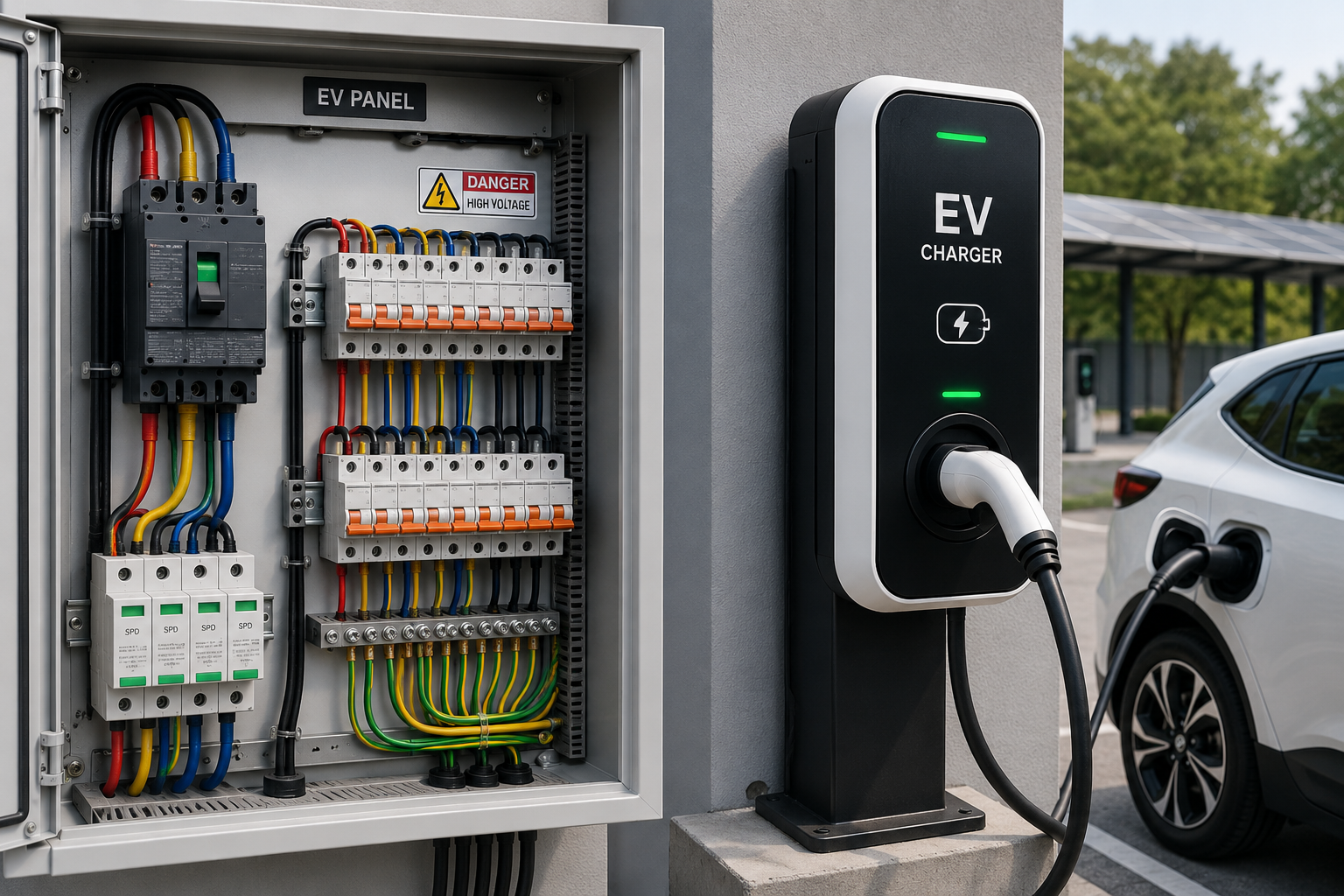
Home EV charging adds another electrical load to the property. Before installation, the existing electrical system should be evaluated to determine how that additional demand can be accommodated.
The assessment may include the electrical panel, existing loads, available circuit space, wiring conditions, and the distance to the proposed charging location.
Why Panel Capacity Is Important
A home already using several significant electrical loads may have different requirements from a property with substantial available capacity.
Rather than assuming the electrical system can support charging, professional evaluation helps establish what the existing infrastructure can safely accommodate.
This is one of the most important stages when planning EV charger installation near me.
Step 3: Choose a Practical Parking Location
Where you park has a major influence on where charging equipment should be positioned.
Walk through your normal parking routine. Where does the vehicle stop? Which direction does it usually face? Where is its charging port located? Would a cable cross a doorway or frequently used walking area?
Convenience Matters Every Day
A small placement inconvenience can become frustrating when repeated hundreds of times.
Thoughtful positioning can make connecting and disconnecting the vehicle feel like a natural part of parking rather than an extra task.
The electrical wiring route also matters. Your preferred location should therefore be discussed with the electrician rather than selected solely for visual convenience.
Step 4: Consider the Installation Environment
Charging locations differ from property to property. Some vehicles are parked inside garages, while others remain on driveways or in partially covered areas.
Environmental exposure, accessibility, electrical routing, and the physical characteristics of the location should all be evaluated.
Homeowners researching EV charger installation near me should explain exactly where they expect to charge their vehicle so the installation can be planned around actual site conditions.
Step 5: Think About Future Driving Plans
Your current electric vehicle is important, but it may not be the only EV the property ever needs to accommodate.
A second household vehicle could become electric later. You might also replace your current vehicle with one that has different charging requirements.
Planning for realistic future possibilities can help avoid unnecessarily restrictive decisions today.
Could Your Household Eventually Have Two EVs?
If the answer is reasonably likely to be yes, mention it during the initial electrical assessment.
That does not automatically mean installing two charging points immediately. It simply gives the electrician more information about how the property’s electrical requirements may evolve.
Step 6: Prepare for the Installation Visit
Before the scheduled work, make sure the electrical panel and proposed charging area are easily accessible.
Move stored belongings or other obstacles that could restrict access. If the installation route passes through a garage or utility area, clearing the surrounding workspace can also help.
A qualified EV charging electrician near you can then inspect the relevant areas and complete the work based on the property’s electrical conditions and planned charging arrangement.
Step 7: Understand How You Will Use Home Charging
Once charging is available at home, establishing a simple routine can make EV ownership more convenient.
For many drivers, connecting the vehicle after arriving home becomes similar to plugging in a phone or another regularly charged device. The vehicle can remain connected during its normal parking period and be ready when it is needed again.
Home charging is particularly useful because it takes advantage of time that would otherwise be inactive.
Common Planning Mistakes to Avoid
One mistake is choosing an installation point before considering the electrical wiring route. Another is focusing entirely on maximum charging capability instead of actual driving requirements.
Homeowners can also overlook future parking changes. A charging location that works perfectly for one vehicle configuration may be less convenient if another vehicle is parked differently.
Finally, never assume existing electrical capacity without an assessment. Electrical requirements should be determined from the property’s actual conditions.
Finding EV Charger Installation Near Me
A convenient home charging experience begins with careful preparation. Daily driving distance, parking habits, electrical capacity, installation location, and future vehicle plans all contribute to the final setup.
When looking for EV charger installation near me, start by understanding your routine and having the property’s electrical system professionally assessed. Then consider where charging will be most practical both today and in the years ahead.
With the right preparation, home charging can fit naturally into everyday life. Instead of making charging a separate task, homeowners can use the hours their vehicle already spends parked to keep it ready for the next journe