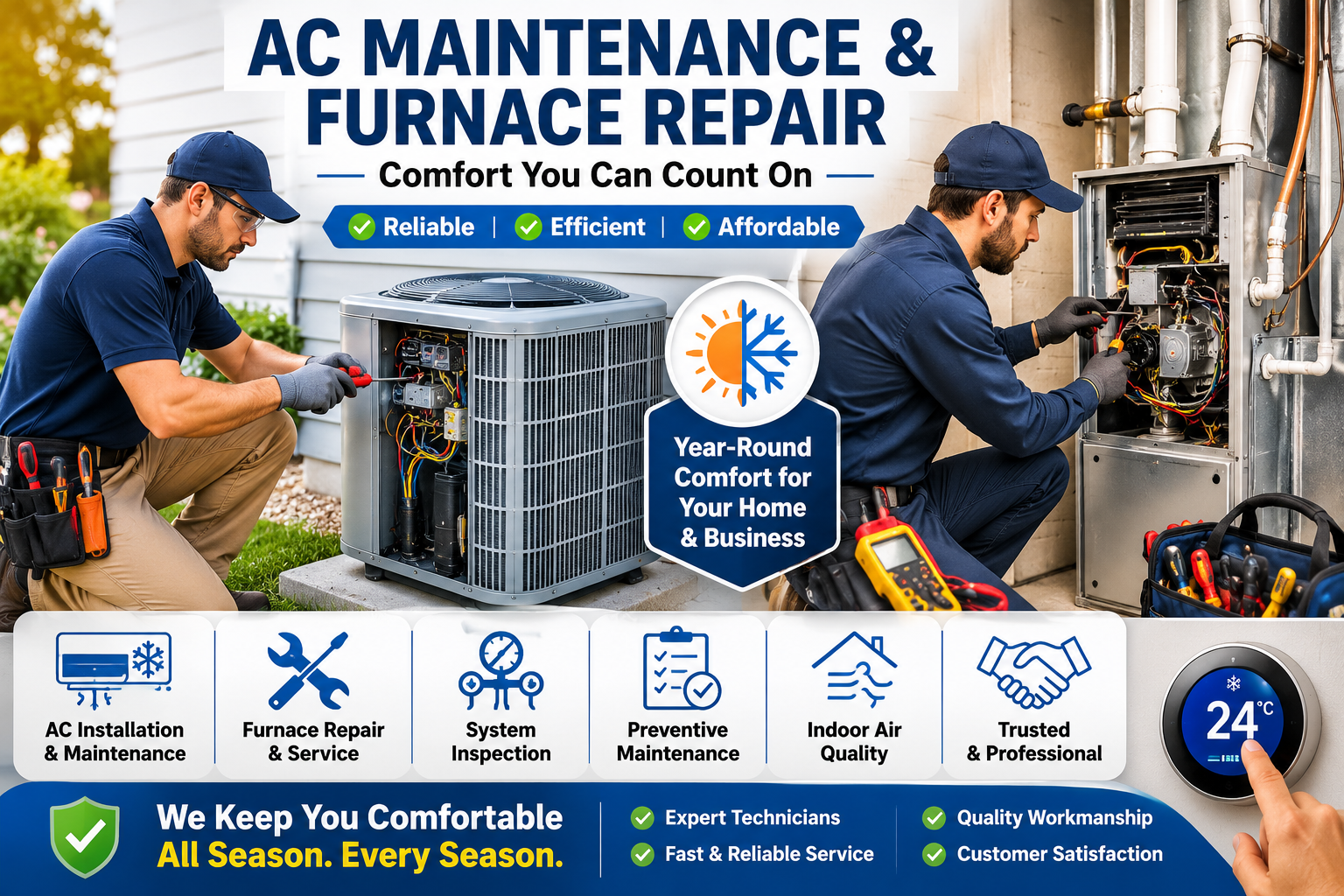
A dependable heating system is easy to take for granted until cold weather arrives and something stops working. Regular furnace maintenance helps homeowners prepare their heating equipment for demanding conditions while supporting consistent comfort and reliable operation. Instead of waiting for strange noises, weak airflow, or a complete breakdown, preventive care allows potential problems to be identified much earlier.
A furnace contains mechanical, electrical, and airflow components that work together every time the thermostat calls for heat. Dust accumulation, normal wear, restricted airflow, and loose components can gradually affect performance. A sensible maintenance routine keeps these issues from going unnoticed.
What Makes Furnace Maintenance Important?
Heating equipment can operate for long periods during colder months. That repeated operation naturally creates wear.
Routine furnace maintenance provides an opportunity to inspect the system, evaluate its condition, and address minor concerns before they interfere with normal heating.
Maintenance can also help homeowners become more familiar with how their furnace normally operates. That makes unusual behavior easier to recognize.
Better Heating Reliability
A furnace that has been neglected may still work, but unnoticed problems can increase the possibility of an unexpected interruption.
Preventive inspections cannot guarantee that a breakdown will never occur. However, they can reveal visible wear, airflow problems, abnormal operation, and other concerns before they become more disruptive.
Start With the Furnace Filter
One of the simplest ways homeowners can care for their heating system is by checking the air filter.
As the furnace circulates air, the filter captures dust and other airborne particles. Eventually, excessive buildup can restrict airflow.
Regular filter inspection should therefore be a basic part of furnace maintenance.
Why Restricted Airflow Matters
A heating system depends on adequate airflow to distribute warmth throughout the property.
When a dirty filter limits circulation, rooms may become harder to heat evenly. The furnace may also operate differently as it attempts to satisfy thermostat settings.
Filters should be cleaned or replaced according to their design and the equipment’s requirements.
Keep Supply and Return Vents Clear
Air must move freely into and out of the heating system. Unfortunately, household items can unintentionally interfere with that process.
Furniture, curtains, rugs, storage boxes, and other objects may partially cover vents.
As part of routine furnace maintenance, homeowners should periodically check accessible supply and return openings throughout the home.
Do Not Close Vents Without a Reason
Closing multiple vents in unused rooms may seem like an easy way to redirect heat, but heating systems are designed around particular airflow requirements.
Making significant airflow changes without understanding the system can affect performance. Maintaining proper circulation is generally more useful than attempting to control comfort by randomly blocking vents.
Listen for Changes in Furnace Sounds
Most homeowners become familiar with the normal sounds their furnace makes during startup, operation, and shutdown.
New sounds deserve attention.
Rattling, banging, squealing, scraping, or grinding can indicate that something has changed within the system.
Early Investigation Can Help
A minor vibration may be relatively simple to address, while a grinding noise could point to a more significant mechanical concern.
Because different problems can create similar sounds, furnace maintenance should focus on identifying the cause rather than guessing which component is responsible.
Monitor Heating Cycles
A furnace normally starts when indoor temperatures fall below the thermostat setting and shuts down after satisfying the heating demand.
Changes in this pattern may indicate a problem.
For example, a furnace that repeatedly starts and stops over short intervals may be experiencing airflow, thermostat, control, or equipment issues.
Long Operating Cycles Also Matter
A furnace that suddenly runs much longer than usual may be responding to colder weather, but building or equipment problems can also contribute.
Poor insulation, air leakage, restricted airflow, or declining furnace performance can increase heating demand.
Routine furnace maintenance can help determine whether the equipment itself is contributing to longer cycles.
Professional Maintenance Goes Beyond Basic Cleaning
Homeowners can perform useful tasks such as checking filters and keeping vents clear. However, internal furnace inspection requires appropriate technical knowledge.
A professional maintenance visit may involve evaluating controls, electrical components, airflow, mechanical condition, and overall operating performance.
Testing System Operation
A furnace should start, run, and shut down correctly in response to thermostat demands.
Operational testing can reveal irregular behavior that may not be obvious during casual observation.
This makes furnace maintenance valuable even when the equipment appears to be heating normally.
Do Not Overlook the Thermostat
Sometimes a heating complaint originates outside the furnace itself.
Incorrect settings or thermostat-related problems can affect when the system operates and how comfortable the home feels.
Before assuming the furnace has failed, homeowners should confirm that the thermostat is set appropriately for heating.
Avoid Extreme Temperature Adjustments
Raising the thermostat dramatically does not necessarily make the furnace heat the home faster.
Reasonable, consistent settings generally provide more predictable operation. Homeowners can also use appropriate scheduling features to match heating periods with their daily routines.
Consider the Home’s Overall Efficiency
Even excellent furnace maintenance cannot fully compensate for a building that loses heat rapidly.
Insulation, windows, doors, weather sealing, and air leakage all influence heating demand.
A room that remains colder than the rest of the property may not necessarily have a furnace problem.
Heating Is a Whole-Home Process
The furnace produces and distributes heat, while the building envelope helps retain it.
Looking at both sides of this relationship can provide a clearer picture when homeowners experience comfort problems.
Build Furnace Maintenance Into a Routine
Preventive care is easier when it becomes part of normal home maintenance rather than something remembered only after a problem occurs.
Check filters periodically, keep vents unobstructed, observe system performance, and arrange appropriate inspections before heavy heating periods.
Keeping basic maintenance records can also help track recurring problems and changes in system behavior.
Conclusion
Preventive furnace maintenance is an important part of keeping a home comfortable throughout colder weather. Simple habits such as monitoring filters, maintaining clear airflow paths, listening for unusual noises, and watching heating cycles can reveal developing concerns early. Combined with periodic professional inspection and attention to the home’s overall efficiency, regular maintenance helps support dependable operation and more consistent indoor comfort when the heating system is needed most.