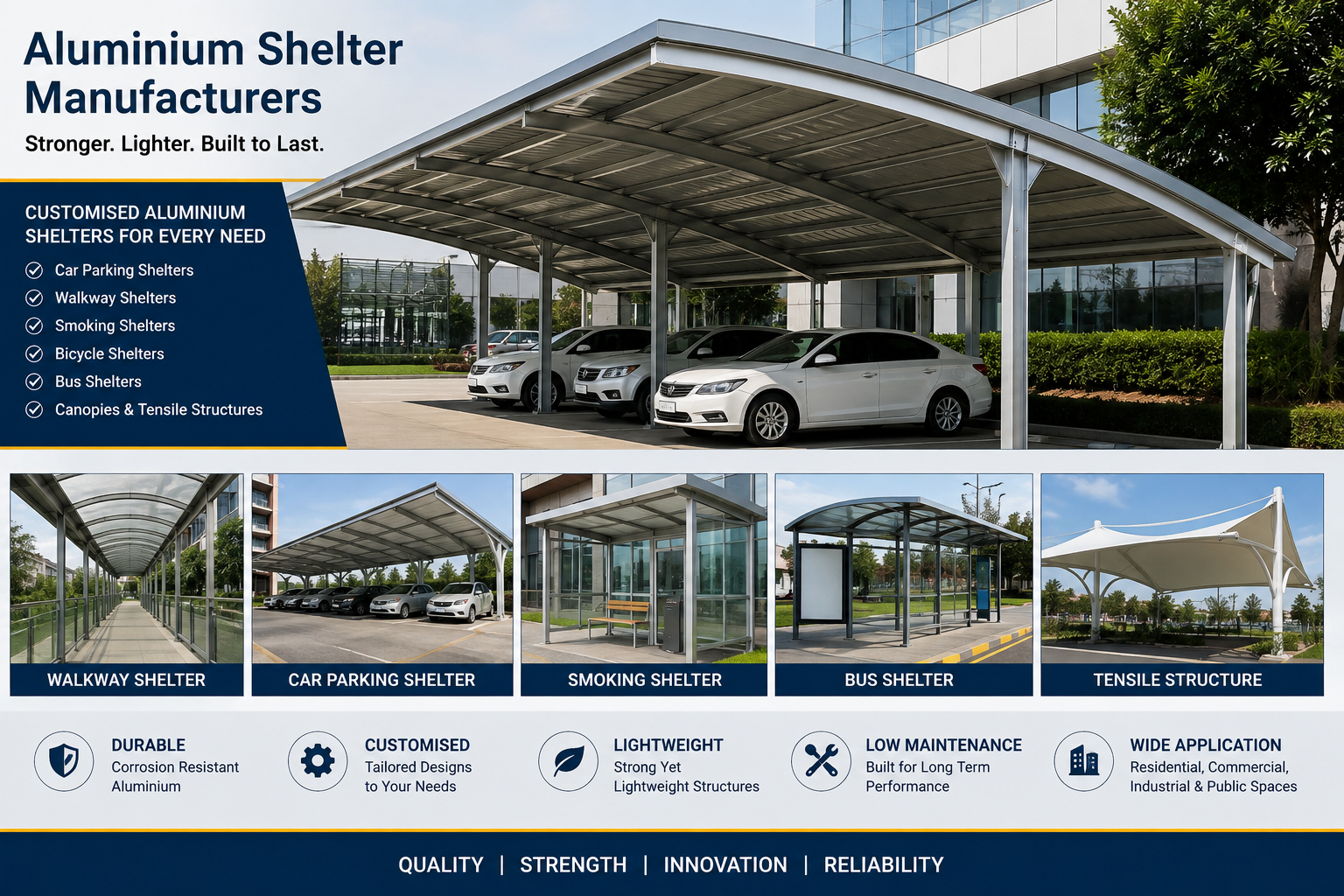
Public transportation works best when every part of the passenger journey feels practical, safe, and comfortable. While vehicles and routes often receive the most attention, the waiting environment also plays an important role in the overall transit experience. A well-planned shelter can provide protection from changing weather, improve visibility, organize passenger flow, and create a more welcoming streetscape.
Choosing experienced aluminum transit shelter suppliers can therefore be an important step when planning transportation infrastructure. Aluminum offers a useful combination of strength, design flexibility, corrosion resistance, and relatively low maintenance requirements. When these qualities are paired with thoughtful shelter planning, transit stops can become more functional for passengers and easier to manage over the long term.
Why Aluminum Works Well for Transit Shelters
Transit shelters remain outdoors throughout the year and may face rain, wind, sunlight, temperature changes, pollution, and daily public use. Materials must be selected with these conditions in mind.
Aluminum is commonly considered for outdoor structures because it naturally resists corrosion. Unlike materials that may require frequent protective treatment, aluminum can provide reliable outdoor performance with manageable maintenance.
Another advantage is its strength-to-weight ratio. Shelter components can remain structurally dependable without becoming unnecessarily heavy. This characteristic can support efficient fabrication, transportation, installation, and future maintenance.
For planners evaluating aluminum transit shelter suppliers, material quality should be considered alongside engineering, fabrication standards, and practical design experience.
What to Consider When Comparing Shelter Suppliers
Selecting a shelter involves more than choosing an attractive structure. The shelter must work effectively in its actual environment.
Structural Quality and Durability
A transit shelter experiences repeated daily use and constant exposure to outdoor conditions. Frames, roof sections, panels, fasteners, and connections should therefore be designed for dependable performance.
Good construction also considers how individual components work together. A shelter may look simple from the outside, but its durability depends heavily on details such as joints, anchoring points, drainage, and panel support.
Experienced aluminum transit shelter suppliers typically understand that long-term performance starts with careful structural planning rather than appearance alone.
Weather Protection
One of the primary purposes of a transit shelter is to create a more comfortable waiting space. Roof dimensions, side panels, orientation, and local weather patterns can all influence the level of protection passengers receive.
For example, a shelter designed for an exposed roadside location may require different considerations from one installed within a dense urban environment.
Effective shelter planning balances coverage with openness. Passengers should receive meaningful protection without creating a space that feels enclosed or difficult to observe.
Accessibility and Passenger Movement
Transit infrastructure serves people with different mobility requirements. Shelter layouts should support clear movement around seating, entrances, boarding areas, and pedestrian pathways.
Adequate internal space can help passengers using wheelchairs, mobility devices, strollers, or luggage. Clear sightlines may also make it easier to identify approaching vehicles.
When reviewing aluminum transit shelter suppliers, decision-makers should consider whether designs can accommodate accessibility requirements rather than treating accessibility as an afterthought.
Design Flexibility for Different Locations
No two transit stops operate under exactly the same conditions. Passenger volume, sidewalk width, surrounding architecture, road configuration, and climate can vary significantly.
That makes adaptable shelter design valuable.
Aluminum can be fabricated into different structural profiles, dimensions, and configurations. It may also be combined with transparent or solid panels depending on the desired appearance and level of enclosure.
This flexibility allows planners to develop shelters that complement their surroundings instead of forcing every location into an identical format.
Those researching local transit shelter solutions may benefit from considering site conditions before deciding on dimensions, panel arrangements, seating, or other shelter features.
Maintenance Should Be Part of the Initial Plan
Maintenance is sometimes considered only after a shelter has been installed. However, thinking about upkeep during the planning stage can improve long-term performance.
Surfaces should be reasonably easy to clean, while panels and components should be accessible when inspection or replacement becomes necessary. Drainage should also be considered carefully so water does not collect in unwanted areas.
Reliable aluminum transit shelter suppliers may help planners evaluate these practical details early in the process.
Modular Components Can Simplify Repairs
A modular approach can make maintenance more manageable. If individual panels or components can be replaced without dismantling an entire structure, repairs may become faster and less disruptive.
Standardized components may also help simplify future maintenance across multiple transit locations.
The Importance of Appearance in Public Spaces
Transit shelters are functional structures, but they also become visible elements of the streetscape. Their proportions, finishes, panel choices, and overall form can influence how a transportation corridor looks and feels.
A carefully designed shelter can complement surrounding buildings, landscaping, pedestrian areas, and other street furniture.
This is another reason aluminum transit shelter suppliers are often evaluated on more than structural capability. Design flexibility can be especially useful when shelters need to fit different architectural environments while maintaining consistent functionality.
Building Better Waiting Environments
A successful transit stop should do more than provide a place to stand. It should support comfort, accessibility, visibility, and efficient passenger movement while remaining practical to maintain.
Aluminum can provide a strong foundation for achieving these goals because it combines durability with adaptable design possibilities. However, material choice is only one part of the decision. Engineering, weather protection, accessibility, maintenance, and site-specific planning all contribute to long-term performance.
By carefully comparing aluminum transit shelter suppliers and evaluating both structural and passenger needs, planners can create waiting environments that remain useful, attractive, and dependable for years to come.